CJC1295 + IPA (No DAC): Research Overview, Scientific Background, and Laboratory Information
Introduction
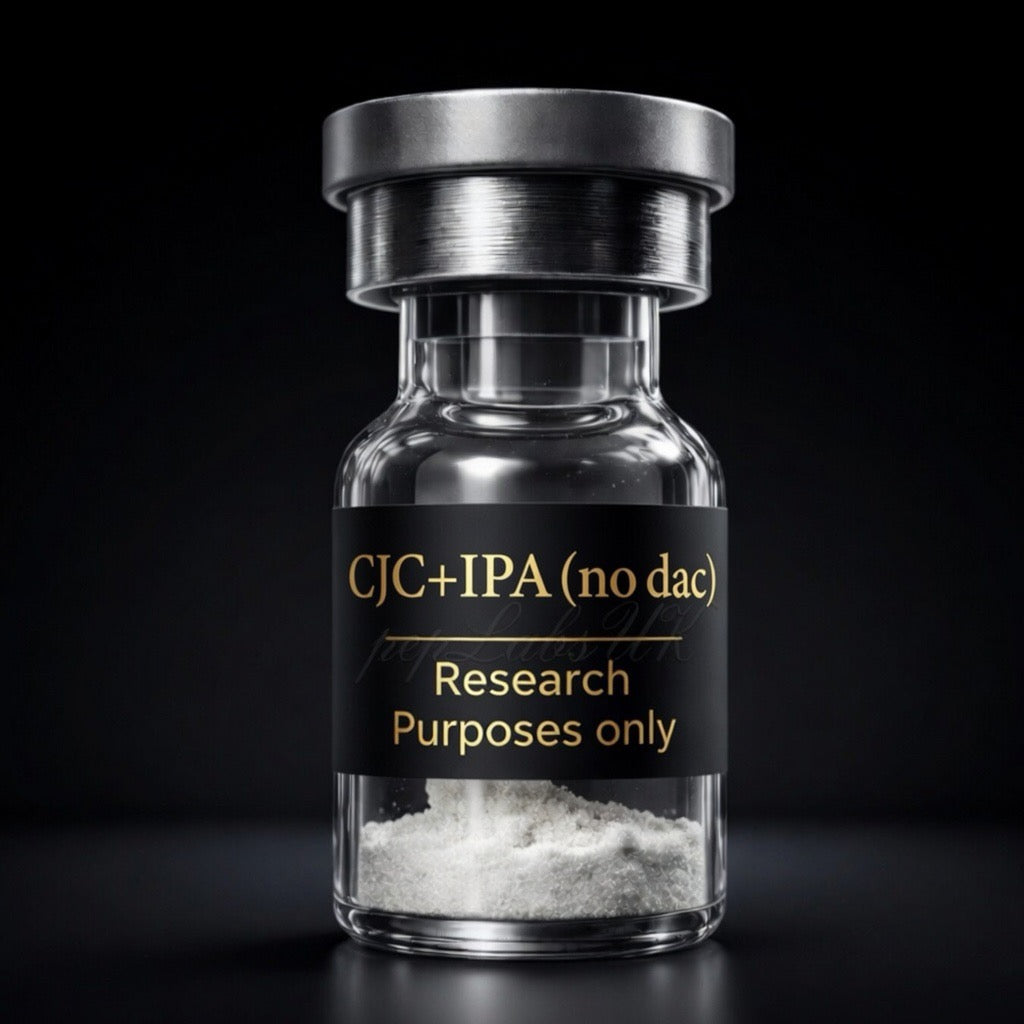
CJC1295 + IPA (No DAC) is a peptide combination that has attracted scientific interest in endocrine physiology, peptide receptor biology, and growth hormone signalling research. In laboratory settings, these two synthetic peptides are often studied together because they interact with different biological pathways involved in the regulation of growth hormone secretion.
This article provides an educational overview of CJC1295 (No DAC) and Ipamorelin, explains why researchers investigate this peptide combination, discusses laboratory documentation and quality considerations, and summarizes the current state of scientific research. It is intended for informational purposes only and should not be interpreted as medical advice or evidence of approved therapeutic use.
What Is CJC1295 + IPA (No DAC)?
CJC1295 is a synthetic analogue of growth hormone-releasing hormone (GHRH). It was developed to help researchers investigate the biological mechanisms involved in growth hormone regulation.
The “No DAC” designation means the peptide does not include the Drug Affinity Complex (DAC) modification found in another version of CJC1295. Without this modification, the peptide demonstrates different pharmacokinetic characteristics in research models, making it useful for studies comparing various GHRH analogues.
Researchers examine CJC1295 (No DAC) to better understand receptor interactions, hormone signalling, and peptide stability.
What Is Ipamorelin?
Ipamorelin is a synthetic pentapeptide classified as a selective growth hormone secretagogue. Scientific studies have investigated its interaction with ghrelin receptors and its role in stimulating growth hormone release in experimental models.
Unlike some earlier growth hormone secretagogues, Ipamorelin has been researched for its receptor selectivity, allowing scientists to investigate more targeted signalling pathways during laboratory experiments.
Research involving Ipamorelin continues to expand knowledge of endocrine biology and peptide-receptor interactions.
Why Are These Peptides Studied Together?
Researchers frequently investigate CJC1295 + IPA (No DAC) and Ipamorelin together because they influence separate biological pathways involved in growth hormone regulation.
Scientific investigations explore:
- Growth hormone signalling
- Endocrine physiology
- Peptide receptor interactions
- Molecular communication
- Cellular signalling pathways
- Hormone regulation models
Studying both peptides together allows researchers to examine how different signalling mechanisms function within controlled laboratory environments.
CJC1295 (DAC) vs. CJC1295 (No DAC)
One important distinction in peptide research is the difference between DAC and No DAC formulations.
CJC1295 (DAC):
- Contains the Drug Affinity Complex modification.
- Designed for extended biological activity in research settings.
- Investigated for prolonged receptor interaction.
CJC1295 (No DAC):
- Does not include the DAC modification.
- Exhibits different pharmacokinetic characteristics.
- Commonly used in studies evaluating shorter-duration peptide activity.
Understanding these differences helps researchers select the appropriate peptide for specific experimental objectives.
Product Quality and Documentation
Quality assurance is essential when evaluating peptide research materials.
Researchers typically review:
- Product identity
- Batch numbers
- Purity information
- Certificate of Analysis (when available)
- Manufacturing documentation
- Packaging integrity
Accurate documentation helps improve reproducibility and supports laboratory record-keeping.
Packaging and Storage CJC1295 + IPA (No DAC)
Proper packaging helps protect peptide research materials from contamination and environmental exposure.
General laboratory practices include:
- Inspecting packaging upon receipt.
- Verifying product labels.
- Recording batch information.
- Following manufacturer storage recommendations.
- Maintaining organized laboratory records.
Storage requirements vary depending on formulation and supplier instructions. Researchers should always consult the manufacturer’s documentation.
Current Scientific Research
Research involving CJC1295 + IPA (No DAC) and Ipamorelin continues in several scientific disciplines, including:
- Molecular biology
- Endocrinology
- Peptide chemistry
- Cell biology
- Receptor pharmacology
- Protein signalling research
Much of the available literature consists of laboratory and preclinical investigations. Additional research is required to further understand these peptides and their biological mechanisms.
Scientific findings should always be interpreted within the context of controlled research and should not be viewed as evidence of approved medical applications.
Responsible Laboratory Practices
When working with peptide research materials, researchers generally follow established laboratory procedures, including:
- Reviewing technical documentation.
- Confirming product identity.
- Maintaining accurate experimental records.
- Following institutional safety protocols.
- Using validated laboratory equipment.
- Complying with applicable regulations.
Responsible documentation supports research quality and reproducibility.
Frequently Asked Questions
What does “No DAC” mean?
“No DAC” indicates that the CJC1295 peptide does not contain the Drug Affinity Complex modification.
Why is Ipamorelin studied? CJC1295 + IPA (No DAC)
Researchers investigate Ipamorelin because of its interaction with ghrelin receptors and its role in endocrine signalling research.
Why are these peptides combined in research?
Scientists study the combination to examine different pathways involved in growth hormone regulation and peptide signalling.
Is CJC1295 + Ipamorelin approved as a medical treatment?
Research involving these peptides should not be interpreted as evidence of approved medical uses. Regulatory status varies by jurisdiction, and many peptide products are supplied exclusively for laboratory research.
Why is documentation important?
Documentation helps verify product identity, specifications, batch information, and available quality testing, supporting accurate laboratory research.
Conclusion
CJC1295 + Ipamorelin (No DAC) remains an important subject of scientific investigation within peptide biology and endocrine research. By examining the interaction of these peptides with different receptor systems, researchers continue to improve understanding of growth hormone signalling and molecular communication.
Careful attention to product quality, documentation, storage practices, and laboratory procedures supports responsible scientific investigation. As research advances, additional studies will continue to expand knowledge of these peptides and their role in experimental biology while maintaining appropriate scientific and regulatory standards. CJC1295 + IPA (No DAC) CJC1295 + IPA (No DAC)